How does a solo player hold a monument in Rust against multiple neighbors?
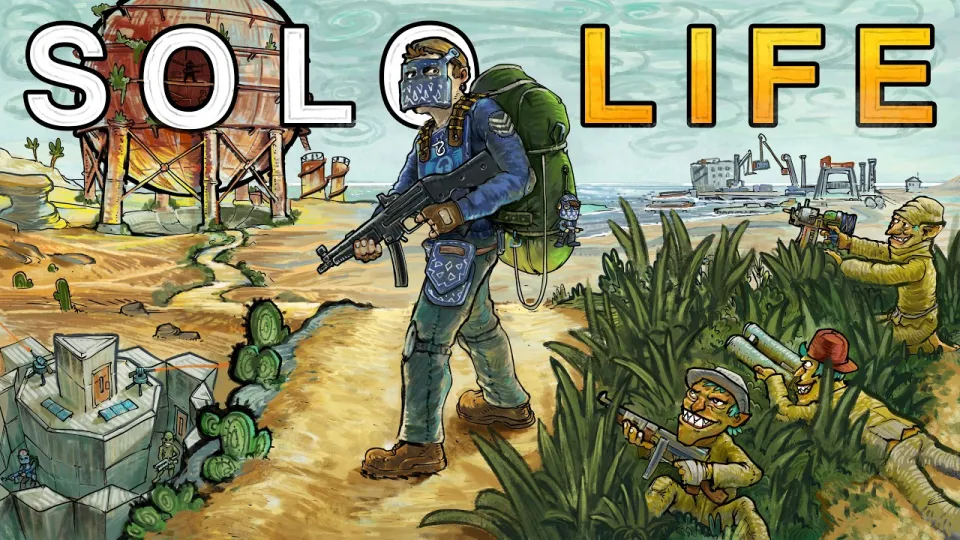
Video: Rust - THE SOLO LIFE V16
Need articles like this for your video? They help promote it on YouTube and Google — order them in the Telegram bot @sat_sit_bot. It writes articles around your video, embeds the video and publishes them on popular niche websites (no ads). Your first 50 articles are free.
· based on the channel Blooprint
A solo player holds a monument in Rust by building a small, cheap base close enough to contest the loot, keeping a parachute and a second escape route ready, and treating every fight as optional. The Solo Life V16 from Blooprint is built exactly around that idea: one player, one OP monument, and a ring of angry neighbors who want the same crates. If you want to try War Thunder yourself, you can grab a free bonus through the sponsor link used in the video.
What the Solo Life V16 run is actually about
The Solo Life is Blooprint's long-running solo-only format, and V16 returns to the core loop: spawn, get a starter down fast, and push toward a monument instead of farming quietly. The premise stated in the video description is simple — hold an OP monument while fending off multiple angry neighbors, completely solo. That means the content is not a build guide or a loot tour; it is a pressure test of how long one player can stay profitable in a spot that groups also want.
Solo Rust rewards patience over aggression. A duo or trio can trade deaths and come back; a solo player who loses a full kit loses hours of progress. That asymmetry is the whole tension of the format, and it is why the video leans on movement, timing and knowing when to walk away rather than on raw aim.
The solo base setup that makes a monument hold possible
A monument hold starts with base placement, not with guns. The practical checklist for a solo base near a contested monument looks like this:
- Keep the footprint small — a 1x2 or 2x1 with honeycomb is cheaper to rebuild than a compound and draws less attention from raiders.
- Put the loot room behind at least two doors and one sheet-metal or armored layer; wood doors are a speed bump, not a defense.
- Split your stash. A small drop box or a second sleeping bag base nearby means one raid does not end your wipe.
- Build a shooting position that overlooks the monument approach, so you can hear and see players before they see your door.
- Stock the essentials before you get greedy: meds, ammo, a repair bench and enough low-grade to keep furnaces running.
Blooprint's starter builds are famously lean, and viewers noticed the nod to a Willjum-style starter early in the run — the point being that cheap, fast and functional beats pretty. On a solo account, the base is not a home, it is a respawn point with a gun inside.
Why Cargo and Dome keep deciding solo fights
Monuments and events are where solo players meet groups, and Cargo and Dome are the two that show up most in this kind of run. Both are vertical, both have tight interiors, and both punish a player who commits to a fight without an exit. Cargo is the better of the two for a solo: the deck gives you sightlines, the crates give you a reason to be there, and the water gives you a way out.
Dome is the opposite problem. It is small, it is loud, and once someone knows you are inside, the ladders become a trap. The working rule is to loot Dome on your terms — in and out before the noise attracts a second party — and to treat the top of the sphere as a last resort rather than a fortress.
Parachutes, escapes and the fights you should not take
A parachute is the cheapest insurance a solo player can carry, and it turns a lost fight into a repositioning. The logic is straightforward: if you are on high ground at Cargo, Dome or a cliff monument and the fight turns, a parachute converts a death into a glide to safety, and most groups will not chase a player who just left the map vertically.
Three habits keep a solo alive in these moments:
- Always know your second exit before you enter a monument.
- Carry a parachute when you are looting anything with a height advantage.
- Leave loot behind if carrying it slows the escape; a kit you keep is worth more than a crate you lose.
The video's night-time sequences became a running joke in the comments, with viewers pointing out that night vision does not help much when the screen is genuinely dark. Practically, that means a solo should plan rotations around light, keep a flashlight or weapon light on the hotbar, and avoid looting interiors blind when the server turns the lights off.
How a solo player survives an online raid
The defining moment of any solo run is the online raid defense, and the video delivers one against multiple attackers. A solo defense is not won by out-shooting a group; it is won by making every minute of the raid expensive. Useful principles:
- Do not stand still in the core. Move between shooting angles so attackers cannot pre-fire your usual spot.
- Use the raid as a timer. Every door they break is time you spend crafting, repositioning or moving loot to a stash.
- Trade structure for information. Peek, shoot, fall back — a solo cannot afford a fair fight in an open doorway.
- Expect the second wave. Groups often split, and the player who assumes the raid is over usually loses the loot room.
- Keep a fallback spawn. A bag outside the base turns a wipe into a rebuild.
Two solo players with a shared goal can also change the math. When a friendly neighbor shows up and actually helps, the defense stops being one player against a group and becomes a temporary alliance — one of the most reliable ways a solo holds ground in Rust. The flip side is the group that burns ten or twenty minutes chasing a single solo: viewers have pointed out that this is time the raiders lose too, which is exactly why patience pays for the defender.
Common questions about solo Rust, answered from the run
Most doubts around solo play come down to gear, allies and time management. A few practical answers:
- Gear fear. Take the cheap kit to the monument and keep the good kit for defense. Losing a revolver hurts less than losing a rifle you cannot replace.
- Neighbors. A friendly neighbor is worth more than a crate. Trading small favors — a door, some scrap, a revive — buys you a defender when the raid comes.
- Duo temptation. Viewers repeatedly pushed for a duo run with a recurring neighbor character, and it is easy to see why: a second pair of hands solves the biggest solo weakness, which is being in two places at once.
- Time. A solo wipe is won in the first hour. Fast starter, fast monument, fast stash — everything after that is defending what you already have.
Useful links
- War Thunder free bonus (PC and consoles): https://wtplay.link/blooprint
- War Thunder mobile: https://wtm.game/blooprint
- Blooprint on Twitch: https://www.twitch.tv/blooprint
- Blooprint on Kick: https://kick.com/blooprint
- Blooprint on TikTok: https://www.tiktok.com/@blooprintgames
What the Solo Life V16 run proves about playing alone
Solo Rust is not a slower version of group Rust; it is a different discipline built on cheap bases, planned exits and refusing bad fights. The monument hold in this run works because the base is disposable, the escapes are rehearsed and the defense is treated as a timer rather than a showdown. A friendly neighbor can swing a raid, a parachute can save a kit, and patience can outlast a group that is burning its own wipe chasing one player. Blooprint's Solo Life series is the clearest demonstration of that loop, and V16 is a solid entry point if you want to see how far one player can push a contested monument. If you want to support the channel, use the War Thunder registration link from the video — it is free and it keeps solo content coming.
Key takeaways
- Blooprint's Solo Life V16 is built around one goal: holding an OP monument completely alone while several neighbors try to push him out.
- The run follows the Solo Life formula: a compact starter, a monument-adjacent base, and constant PvP instead of long farming sessions.
- Cargo and Dome are the recurring hotspots where solo players meet groups, and parachutes turn a bad fight into a free exit.
- Online raid defense is the real test of a solo base: doors, drop boxes and a second stash decide whether the wipe survives.
- The video dropped on 30 September and landed right after the A Solo's Journey series, which is why the solo format is back in rotation.
Source: Rust - THE SOLO LIFE V16 · Markdown version
Questions & answers
Can you actually hold a monument alone in Rust?
Yes, but only with the right conditions: a cheap base close to the monument, a second stash, and a planned exit from every fight. The goal is not to control the monument around the clock but to loot it repeatedly and leave alive. Groups can push you out eventually, so profit early and rebuild fast.
What is the best escape tool for a solo player at Cargo or Dome?
A parachute is the most reliable one, because both monuments give you height. It converts a losing fight into a glide away from the fight instead of a death and a lost kit. Combine it with a known second route on the ground so you are not relying on one option.
How do you defend a solo base against an online raid?
Make the raid expensive in time rather than trying to win every gunfight. Move between angles, keep crafting and moving loot while doors break, and assume a second wave is coming. A sleeping bag outside the base is what lets you rebuild if the core falls.
Is a duo better than pure solo in Rust?
A duo fixes the main solo weakness, which is being unable to cover two positions at once, and it halves the farming burden. Pure solo still has advantages: fewer people to split loot with, a smaller footprint and less attention from raiders. Many players run solo and treat friendly neighbors as temporary allies instead.